Treatment · Glaucoma

Glaucoma Surgery & Other Therapies — YAG PI and SLT in Kuwait

Laser and surgical options for glaucoma pressure control

When eye drops and oral medicines alone are not enough, YAS Eye Clinic offers laser procedures and surgical options tailored to your type and stage of glaucoma. Every plan is built around your eye's anatomy, your intraocular pressure, and your long-term visual goals.

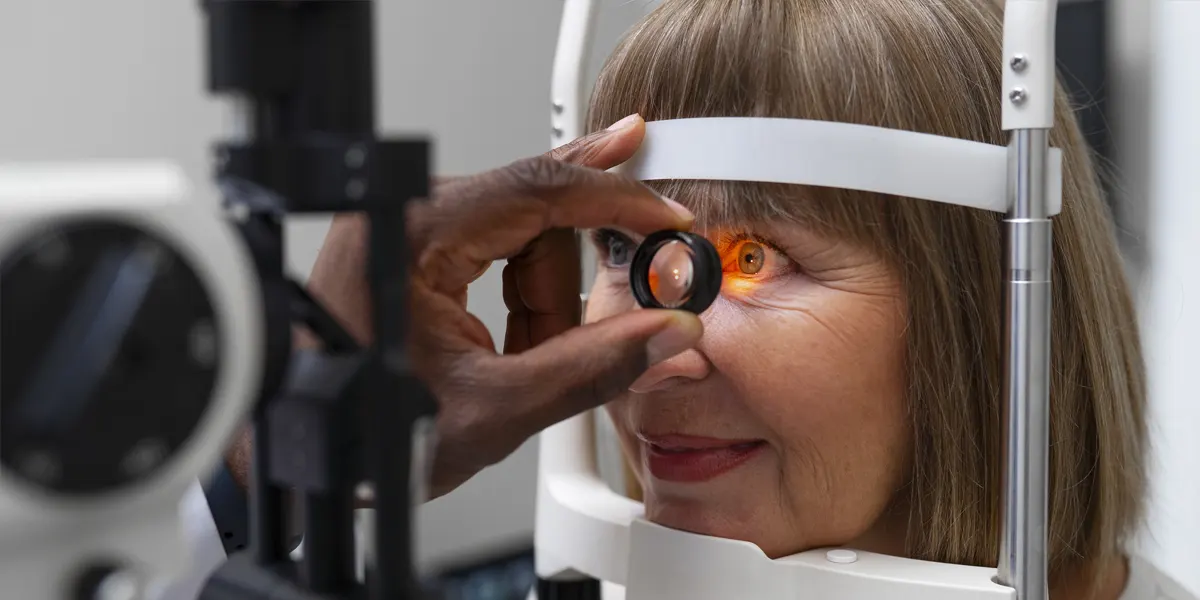
Slit-lamp glaucoma examination with laser lens at YAS Eye Clinic

Laser procedure

YAG-Peripheral iridotomy (YAG PI)

YAG PI, or YAG peripheral iridotomy, is a laser procedure used to treat certain types of glaucoma, particularly angle-closure glaucoma. Glaucoma is a group of eye conditions that can damage the optic nerve and potentially lead to vision loss. In angle-closure glaucoma, the fluid inside the eye cannot drain properly, causing a sudden increase in intraocular pressure.

The YAG PI procedure involves creating a small hole in the peripheral iris, which is the outer edge of the colored part of the eye. This opening allows the intraocular fluid to bypass the blocked drainage system and flow out of the eye more easily, thereby reducing the pressure inside the eye. Performed on an outpatient basis, YAG PI is a minimally invasive procedure that typically takes only a few minutes to complete.

It does not require incisions or sutures and is generally well-tolerated by patients. During the procedure, patients may experience a slight sensation of pressure or warmth in the eye as the laser is applied. The procedure is considered safe and effective for treating certain types of glaucoma and can help prevent further damage to the optic nerve, thus preserving vision.

After the procedure, patients can usually resume normal activities immediately, although they may be advised to avoid strenuous exercise or heavy lifting for a short period. Overall, YAG PI is an important treatment option for managing specific types of glaucoma, offering a quick and relatively painless method to reduce intraocular pressure and maintain eye health.

Laser procedure

S.L.T (Selective Laser Trabeculoplasty)

Selective Laser Trabeculoplasty, or SLT, is used when eye drop medications are not lowering the eye pressure enough or are causing significant side effects. It can also be used as initial treatment in glaucoma. SLT has been in use for more than 25 years in the United States and around the world.

Who is a candidate for SLT?
Patients who have primary or secondary open-angle glaucoma (the drainage system in the front part of the eye is open) and are in need of lowering of their intraocular pressure (IOP) are eligible for the procedure. Your eye doctor will make the final determination if you are a candidate.
How does it work?
Laser energy is applied to the drainage tissue in the eye. This starts a chemical and biological change in the tissue that results in better drainage of fluid through the drain and out of the eye. This eventually results in lowering of IOP. It may take 1–3 months for the results to appear.
Why is it called Selective?
The type of laser used has minimal heat energy absorption because it is only taken up by selected pigmented tissue in the eye. Sometimes it is referred to as a cold laser. Because of this, the procedure produces less scar tissue and has minimal pain.
What are the risks?
One key aspect of SLT is a favorable side effect profile, even when compared with glaucoma medications. Post-operative inflammation is common but generally mild, and treated with observation or eye drops or an oral non-steroidal anti-inflammatory drug. There is an approximately 5% incidence of IOP elevation after laser, which can be managed by glaucoma medications and usually goes away after 24 hours.
How effective is it and how long does it last?
SLT lowers the IOP by about 30% when used as initial therapy. This is comparable to the IOP lowering of the most powerful and commonly used class of glaucoma medication (prostaglandin analogs). This effect may be reduced if the patient is already on glaucoma medications. The effect will generally last between 1–5 years, and in some cases, longer than that. If it does not last at least 6–12 months, it is usually not considered successful.
What happens if it wears off?
If SLT is effective at lowering IOP but this wears off over several years, the procedure can be repeated. Repeat treatments may or may not lower IOP as much as the first, and continued repeat laser will eventually not be effective. If SLT is not initially successful, repeat treatment is not likely to be effective. Alternatively, glaucoma medication can be used if the effect wears off over time.
What happens if it doesn’t work?
If SLT fails to lower the IOP, then the glaucoma is treated by other means such as medications or surgery. The laser does not affect the success of these other types of treatment.
Will I still need to use glaucoma medications?
Some patients can be controlled with just laser treatment. Others require additional IOP lowering and may therefore need to use glaucoma medication as well. Think of the SLT as equivalent to one glaucoma medication. It is important to remember that SLT is not a cure for glaucoma, just as medication and surgery are not. Whatever method is used to treat glaucoma, appropriate follow up and testing with your eye care professional is critical.

Experience You Can Trust

Glaucoma care led by Dr. Yousif Al Rowaisan — 30+ years of specialist eye surgery in Kuwait

Glaucoma laser and surgical care at YAS Eye Clinic is led personally by Dr. Yousif Al Rowaisan Al Zafiri — a fellowship-trained consultant ophthalmologist (FRC Canada) with over three decades of experience in refractive, cataract, retinal, and glaucoma surgery. Every glaucoma plan at YAS — from first eye-drop regimen to YAG PI, SLT, or glaucoma valve surgery — is reviewed and performed by the same consultant, so your care stays consistent across visits.

Glaucoma FAQ

Common questions about laser and surgical glaucoma treatment

  • When do I need laser or surgery for glaucoma?

    When eye drops and oral medicines no longer bring your intraocular pressure down to a safe level, or when side-effects become unmanageable, laser or surgical treatment is the next step. Dr. Yousif Al Rowaisan will review your pressure history, optic-nerve scans, and visual fields before recommending YAG PI, SLT, or surgery.

  • Is YAG PI painful?

    No. The procedure uses numbing drops and takes only a few minutes per eye. You may feel a faint tap as the laser fires, but most patients describe it as comfortable.

  • How long does SLT take to lower eye pressure?

    SLT works gradually. Most patients see their pressure drop within 4–6 weeks, with the full effect settling in around 1–3 months after the procedure.

  • Can SLT be repeated?

    Yes. If the effect of SLT wears off after a few years, it can be repeated. Repeat treatments may produce a smaller pressure drop than the first session, but they still benefit many patients.

  • Will I still need glaucoma drops after laser treatment?

    Some patients can be controlled with laser alone, but many still need at least one glaucoma drop. Think of SLT as the equivalent of one medication. Your drops are usually reviewed and reduced after the laser takes full effect.

  • What is the recovery like?

    Both YAG PI and SLT are outpatient procedures. You can resume most normal activities the same day, with a brief pressure check one hour after the laser and a follow-up visit within one week.

Book an Appointment

Considering laser or surgical glaucoma treatment?

Book a consultation with our glaucoma specialist to review which laser therapy or surgery is right for you — YAG PI, SLT, or glaucoma valve surgery.

Fast Confirm

Schedule your visit in 60 seconds

Tell us when works best — we reply the same day with a confirmed slot.

By submitting, you agree to be contacted by YAS Eye Clinic. We respect your privacy.

'Common Questions'

'Glaucoma Surgery & Laser Therapies — Frequently Asked Questions'

  • When is glaucoma surgery recommended?

    When drops and in-office laser no longer keep eye pressure in the safe range, or when optic-nerve damage is progressing. Surgery then provides 24-hour pressure control that drops alone cannot match.

  • What is SLT laser for glaucoma?

    Selective Laser Trabeculoplasty uses a cool laser to improve the eye’s natural drainage. It is painless, takes minutes, and can lower pressure by 25–30%. Some patients avoid drops for years after one session.

  • What is a trabeculectomy?

    Trabeculectomy creates a tiny new drainage channel under the upper eyelid so aqueous fluid can leave the eye more freely. It is the gold-standard operation for advanced open-angle glaucoma.

  • Are glaucoma valves (Ahmed, Baerveldt) safe?

    Yes — modern valved implants (Ahmed, Baerveldt, ClearPath) are well established for patients whose glaucoma is not controlled by drops, laser, or trabeculectomy. Regular follow-up keeps them working for years.

  • How long is recovery after glaucoma surgery?

    Most patients return to light activity in 1 week and full activity in 4–6 weeks. Drops continue during healing, and we see you several times in the first month to fine-tune pressure.

  • How do I book a glaucoma surgery evaluation?

    Call +965 553 06625 or use the booking form to schedule a same-week pressure review, OCT, and surgical plan in Al-Shaab.