

FAQ
Patient Questions — Every Treatment at YAS Eye Clinic
A practical, no-jargon answer to the questions our ophthalmology team hears most from patients in Kuwait — across refractive surgery, cataract surgery, glaucoma, retina, eye injections, vitrectomy, and clinic logistics. If your question isn't below, send a quick message on the form at the bottom of this page.
About YAS Eye Clinic
-
Where is Yas Eye Clinic Located ?
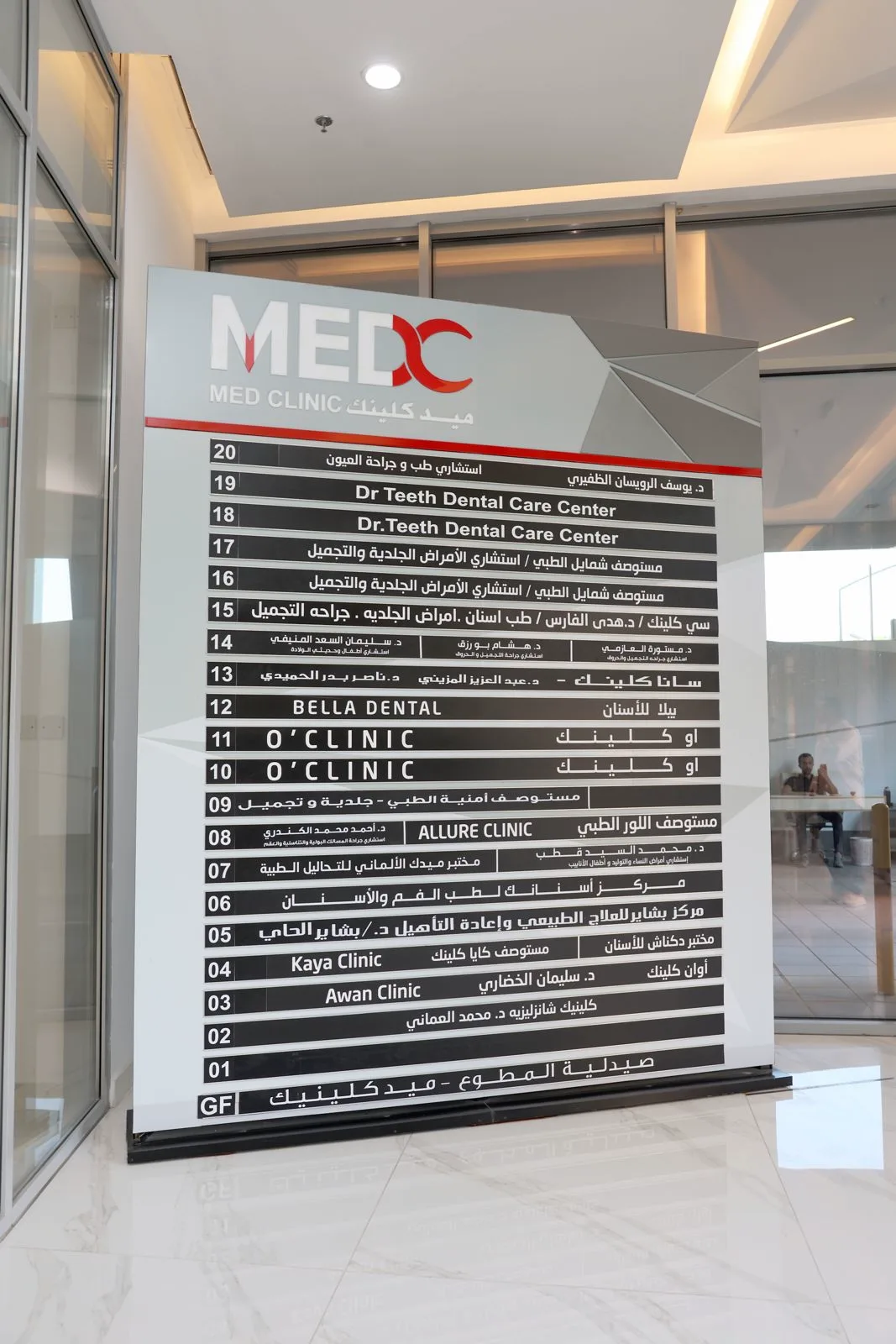
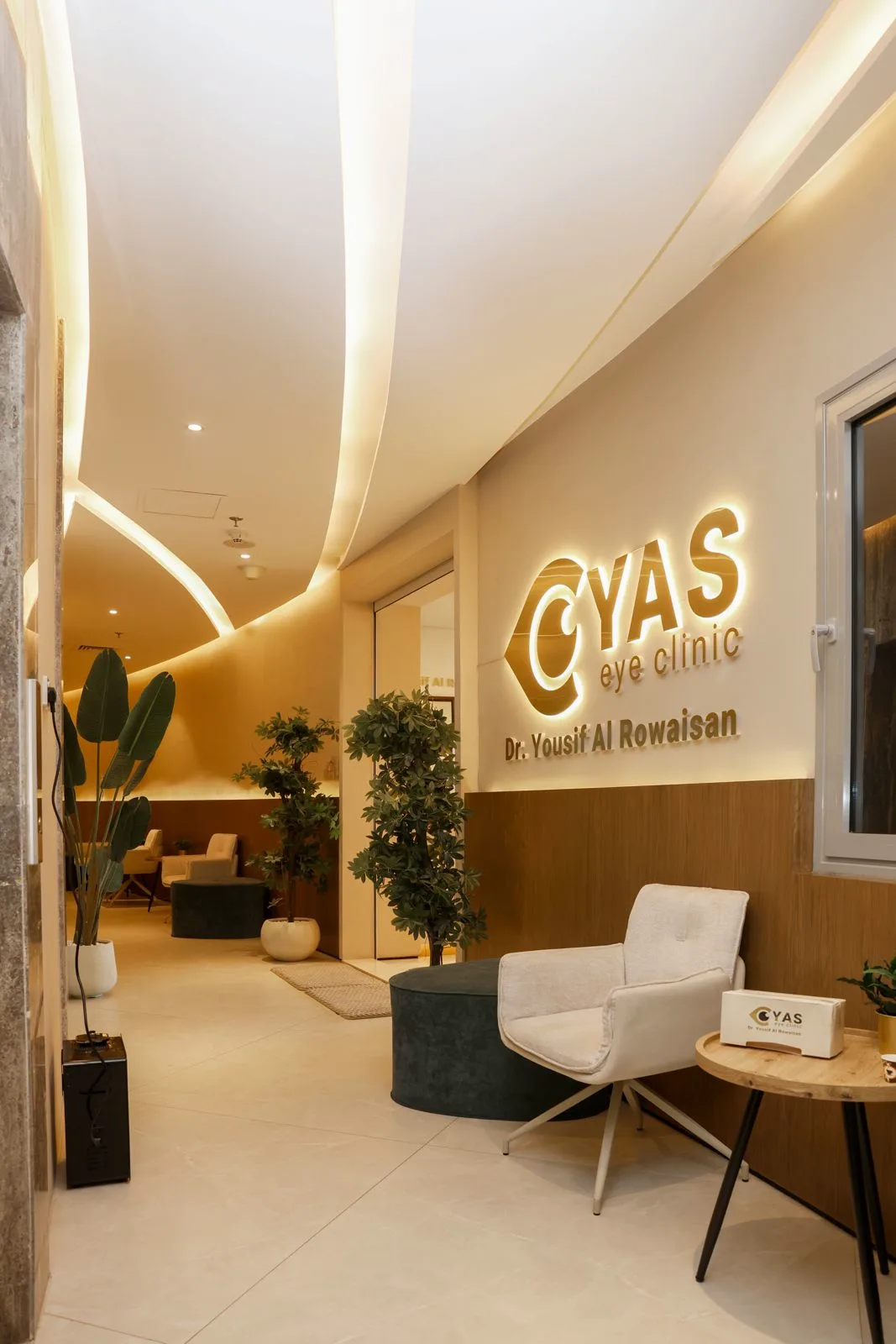
YAS Eye Clinic is a specialist eye clinic in Kuwait led by Dr. Yousif Al Rowaisan Al Zafiri — a fellowship-trained consultant ophthalmologist (FRC Canada) with 30+ years of experience in refractive, cataract, retinal and glaucoma surgery. The clinic is on the 20th floor of Med C Clinic, Al-Shaab — Block 8, Street 81, Building 100 — serving patients from Al-Shaab, Mishref, Hawalli and across Kuwait.
-
Who is Dr. Yousif Al Rowaisan Al Zafiri?
Dr. Yousif is the Medical Director and lead consultant at YAS Eye Clinic. He holds the Fellowship of the Royal College of Canada (FRC Canada), and has practised consultant ophthalmology in Kuwait for over three decades. He performs refractive surgery (LASIK, PRK, ICL), cataract surgery with premium IOLs, glaucoma laser and surgery, and advanced retina care including intravitreal injections and vitrectomy.
-
Do I need a referral to come to YAS Eye Clinic?
No. You can book directly — call +965 553 06625, send a WhatsApp, or use the form on this page. If you already have scans or reports from another clinic, bring them along so we can avoid repeat imaging.
-
What are the clinic's opening hours?
Sunday – Wednesday: 9 AM – 7 PM. Thursday: 9 AM – 2 PM. Saturday: 10 AM – 7 PM. Friday: closed. For eye emergencies outside these hours, call +965 553 06625 and our on-call team will guide you.
-
Which insurance and payment methods do you accept?
YAS Eye Clinic accepts cash, credit card, and major insurance plans in Kuwait. Specific coverage depends on your policy — share your insurer when you book and our team will confirm your benefits ahead of time.
Booking & your first visit
-
How do I book an appointment?
Call +965 553 06625, message us on WhatsApp, or use the booking form at the bottom of this page. We reply the same day with available slots and the type of consultation your symptoms need.
-
What should I bring to my first visit?
Bring any glasses or contact-lens prescriptions, recent scans or reports from another clinic (if you have them), a list of current medications, and your insurance card (if applicable). If you wear contact lenses, please stop wearing soft lenses 3 days (or rigid lenses 7 days) before a refractive or cataract assessment.
-
How long does a consultation take?
A first-time consultation usually runs 30 to 60 minutes. A full refractive or cataract assessment, including corneal mapping and biometry, can take up to 90 minutes. Our team shares your scan results the same visit — no waiting days for a callback.
-
Do you offer virtual or video consultations?
Yes, for follow-ups and second opinions where a physical exam is not required. Request a video consult when you book and our team will send a secure link.
Refractive Surgery — LASIK, PRK & Phakic ICL
-
Am I a candidate for refractive surgery?
Most adults over 18 with a stable prescription for at least 12 months, healthy corneas, and adequate tear film are good candidates. Booking a refractive assessment at YAS confirms whether LASIK, PRK, or ICL is the right path for you.
-
What is the difference between LASIK, PRK, and Phakic ICL?
LASIK creates a thin corneal flap and reshapes the cornea with an excimer laser — fastest recovery. PRK reshapes the cornea without a flap — better for thin corneas or contact-sport patients. Phakic ICL implants a tiny corrective lens inside the eye — best for high prescriptions or corneas that cannot be safely lasered.
-
Does refractive surgery hurt?
No. Numbing drops keep the eye comfortable throughout. You may feel mild pressure during the flap step in LASIK, and a scratchy sensation for a few days with PRK. Most patients describe the experience as much easier than they expected.
-
How long is the recovery after LASIK or PRK?
LASIK patients usually see clearly within 24 hours and return to work in 1–2 days. PRK recovery takes 3–5 days for functional vision, with full stabilisation by 1–2 weeks. Phakic ICL recovery is similar to LASIK.
-
Will I still need glasses after refractive surgery?
Most patients reach 20/20 or better for distance. Patients over 40 may still use light reading glasses — monovision or premium lens options can be discussed at your consultation.
Cataract Surgery & Lens Options
-
When should I have cataract surgery?
Modern cataract surgery is most successful when patients choose to have it — not when the cataract is "ripe". If blurred vision, glare at night, faded colours, or difficulty reading are starting to affect daily life, a cataract assessment at YAS confirms whether surgery is the right step.
-
Which intraocular lens (IOL) is right for me — monofocal, toric, or multifocal?
Monofocal lenses give sharp distance vision and are covered by most insurance plans. Toric lenses correct astigmatism at the same time as the cataract. Multifocal lenses provide distance, intermediate, and near focus — closest to glasses-free vision. Dr. Yousif recommends the IOL after biometry, corneal topography, and a personal goals discussion.
-
How long does cataract surgery take, and when can I see clearly?
The procedure itself usually takes 15–25 minutes. You will be at our Al-Shaab clinic for around 90 minutes including preparation and recovery. Many patients see clearly within 24 hours, with full visual stabilisation within 1–2 weeks.
-
Do you offer laser-assisted cataract surgery?
Yes — femtosecond laser assistance can be added for precise corneal incisions and lens fragmentation in selected cases. Our team will discuss whether it adds value to your specific surgery.
-
Can both eyes be done on the same day?
For safety, we operate on one eye at a time — usually 1–2 weeks apart. Your second-eye plan is made after the first eye has healed and we have measured your final refraction.
Glaucoma — Medical, Laser, and Surgical Treatment
-
How do I know if I have glaucoma?
Glaucoma is a silent disease in its early stages. The first signs are usually subtle blind spots in peripheral vision that a perimetry test can detect, plus optic-nerve changes on OCT. Family history, age over 40, and high eye pressure all increase risk. A yearly eye exam at YAS — with pressure check and optic-nerve scan — is the best way to catch glaucoma early.
-
What is the difference between eye drops, SLT, ALT, and YAG PI?
Eye drops lower pressure by reducing fluid production or improving drainage — the first-line treatment. SLT (Selective Laser Trabeculoplasty) and ALT (Argon Laser Trabeculoplasty) are lasers that improve drainage through the eye's natural angle when drops alone are not enough. YAG PI (YAG Peripheral Iridotomy) is a laser that creates a tiny opening in the iris to treat angle-closure glaucoma. Dr. Yousif chooses the right option based on your glaucoma type and pressure history.
-
When is glaucoma valve surgery needed?
A glaucoma valve (drainage implant) is used when eye drops and laser treatment cannot keep your intraocular pressure at a safe level, or for specific glaucoma types such as neovascular glaucoma. The small device routes fluid out of the eye to lower pressure long term.
-
Is glaucoma curable?
Glaucoma damage cannot be reversed, but it can be slowed dramatically with the right treatment. With consistent drops, laser where appropriate, and regular OCT and visual-field monitoring, most patients keep useful vision for life.
-
What is malignant glaucoma and is it an emergency?
Malignant (ciliary block) glaucoma happens when fluid is misdirected behind the vitreous, causing very high pressure and rapid vision loss. It is an emergency — we treat it urgently with cycloplegics, hyperosmotics, and laser or vitrectomy when needed. Call +965 553 06625 immediately if pressure rises suddenly.
Retina, Eye Injections & Macular Degeneration
-
What is an intravitreal eye injection and what does it treat?
An intravitreal injection is a tiny dose of medicine delivered into the vitreous gel at the back of the eye. The most common drugs are Anti-VEGF agents — Avastin (bevacizumab), Lucentis (ranibizumab), and Eylea (aflibercept) — which are the gold-standard treatment for wet age-related macular degeneration, diabetic macular edema, and macular edema from retinal vein occlusion.
-
Is an eye injection painful?
Most patients feel only brief pressure or a tiny sting. We use numbing drops — no needle anaesthetic — and the injection itself takes seconds. Most patients tell us afterwards that it was much easier than they expected.
-
How often will I need eye injections?
It depends on what your OCT scan shows and how the retina responds. Most patients start with monthly loading doses, then move to a personalised interval of every 4 to 12 weeks. We never use a rigid calendar — your scan decides the next visit.
-
Can diabetic eye damage be prevented or reversed?
Strict blood-sugar control, blood pressure control, cholesterol management, and not smoking dramatically reduce the risk of diabetic retinopathy. Early diabetic eye changes can be reversed or stabilised with timely Anti-VEGF injections and laser. We still recommend a yearly retinal exam even with excellent control — early detection saves sight.
-
What is the difference between wet and dry macular degeneration?
Dry AMD causes gradual central vision loss from retinal aging and is managed with nutritional supplements (AREDS2 formula) and lifestyle changes. Wet AMD causes faster vision loss from leaking blood vessels at the macula and is treated with Anti-VEGF injections to stabilise and often improve central vision.
-
What is macular degeneration treatment at YAS?
For wet AMD, we deliver Anti-VEGF injections — Avastin, Lucentis, or Eylea — on a scan-driven schedule. For dry AMD, we use OCT monitoring and tailored AREDS2 nutritional guidance. Early detection matters: book a retinal scan if you notice blurred central vision, distorted lines, or a blank spot in the middle of your sight.
Retinal Detachment & Vitrectomy
-
What causes retinal detachment and what are the warning signs?
Retinal detachment happens when the retina pulls away from the back of the eye — most often after a tear, trauma, or in highly myopic eyes. Warning signs are sudden flashes of light, a new shower of floaters, a dark curtain moving into your side vision, or any sudden drop in vision. It is a vision emergency — call +965 553 06625 the same day.
-
How long does vitrectomy surgery take and what is recovery like?
Most vitrectomy surgeries take 30 to 90 minutes depending on the condition. They are performed under local anaesthesia with light sedation as a day case. You will see Dr. Yousif the next day for a pressure check, and again at one week and four weeks. Refraction is re-checked at six weeks — your glasses prescription may change after surgery.
-
Will I need glasses after retinal surgery?
Often yes, but the prescription may shift. We re-check your refraction about 6 weeks after retinal or vitrectomy surgery and update your glasses then.
Eye Emergencies & After-Hours Care
-
What counts as an eye emergency in Kuwait?
Sudden loss of vision, a dark curtain or shadow in your side vision, new flashes of light, a sudden shower of floaters, severe eye pain, chemical exposure, or any eye injury. Any of these needs an emergency eye examination on the same day.
-
How do I reach YAS Eye Clinic after hours for an urgent problem?
Call +965 553 06625 any time. Our on-call team will guide you on next steps and arrange an urgent visit at our Al-Shaab clinic when needed.
Looking for a specific treatment page? Start with our Refractive Surgery, Cataract Surgery, or Glaucoma Medical Management pages, or see the full contact and booking page.
Still have a question?
Send us a quick message
If your question isn't here, our team is happy to clarify — just send a short note and we'll reply with concrete guidance.
Contact Us
Reach YAS Eye Clinic
We're here to help with appointments, treatment questions, and patient support — in person, by phone, or via WhatsApp and email.

Location
Visit us in Al-Shaab
Med C Clinic — Al-Shaab — Block 8 — Street 81 — Bldg. 100 — 20th Floor — Office No. 52
Open in MapsSunday – Wednesday: 9 AM – 7 PM
Thursday: 9 AM – 2 PM
Saturday: 10 AM – 7 PM
Friday: Closed